Knowing how to signal photographer during surprise proposal moments is the single most critical skill that separates a perfectly captured engagement from a blurry, mistimed memory. The signal is a pre-agreed cue between you and your photographer that triggers them to start shooting at the exact moment you get down on one knee. Without it, photographers guess when to shoot, risking missed shots or, worse, a ruined surprise. This guide covers everything couples planning a Paris proposal need to know: how to choose the right signal, coordinate location and lighting, and avoid the mistakes that cost people their once-in-a-lifetime photos.
What is a signal during a surprise proposal and why it is essential
A signal, in the context of surprise engagement photography, is a discreet, pre-agreed physical gesture or action that tells your photographer to begin shooting. Think of it as a silent director’s cue. The photographer cannot read your mind, and asking them to guess the moment introduces serious risk. Without a clear signal, they may fire the shutter too early, too late, or not at all.
Timing is everything in candid photography for proposals. The authentic expression on your partner’s face in the first two seconds after you ask the question is irreplaceable. A well-executed signal means the photographer is already in burst mode before you even open the ring box. That precision is what produces the jaw-dropping images you see in professional proposal galleries.
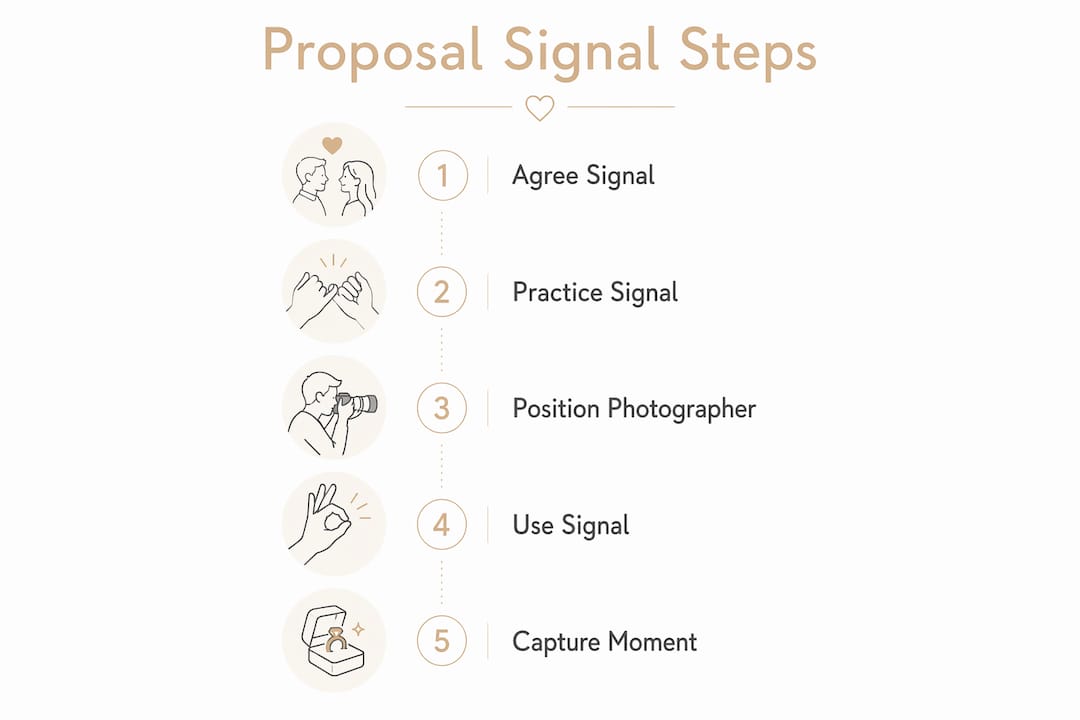
Common signals used by professional proposal photographers include:
Watch adjustment: Glancing at or touching your watch as you approach the spot
Hand to the back of the neck: A natural-looking self-touch gesture that reads as nervousness, not a cue
Removing sunglasses: Clean, visible, and easy to spot from 30 to 50 feet away
Champagne pop: If you are proposing over a bottle of wine or champagne, the pop itself serves as the signal
Phone check: Pretending to look at your phone before pocketing it and reaching for the ring
Each of these works because they look completely natural to your partner while being unmistakable to a photographer who knows what to watch for.
Pro Tip: Choose a signal you would do naturally when nervous. If you never touch your watch, your partner may notice the oddness of it. The best signals are ones you might genuinely do anyway.
How to choose and plan the perfect signal with your proposal photographer
Planning your signal is a conversation, not an afterthought. The best time to discuss it is during your initial consultation with your photographer, before you have locked in any other details. Here is a step-by-step approach that works consistently well for Paris proposals:
Describe the setting first. Tell your photographer where you plan to propose: the Trocadéro, Pont des Arts, the Palais Royal gardens. The location determines how far away they will need to stand and what signals are visible at that distance.
Choose a signal that fits the distance. A subtle neck touch works at 20 feet. At 50 feet, you need something larger: removing a jacket, raising your hand to your hair, or a champagne pop.
Confirm the signal in writing. Send a quick message after your call confirming the exact gesture. Nerves on the day can make details fuzzy.
Discuss a backup signal. Crowds, unexpected weather, or a change of location can disrupt the primary plan. Agree on a secondary cue in advance.
Walk through the timing mentally. Proposal adrenaline affects how quickly proposers move, so mentally rehearsing the sequence from signal to ring reveal helps you stay on pace and gives the photographer enough lead time to focus.
The signal also needs to match the cover story. Many couples use a casual couple photoshoot as a pretext, which means the photographer is already visible and shooting. In that scenario, the signal shifts from “start shooting” to “switch to burst mode and focus on the ring hand.” That distinction matters enormously for the final image quality.
Pro Tip: If you are using a cover story photoshoot, ask your photographer to spend 20 to 30 minutes on relaxed couple portraits before the proposal. This gets your partner comfortable in front of the camera, so their reaction looks natural rather than stiff.
Best practices for coordinating location, lighting, and photographer positioning
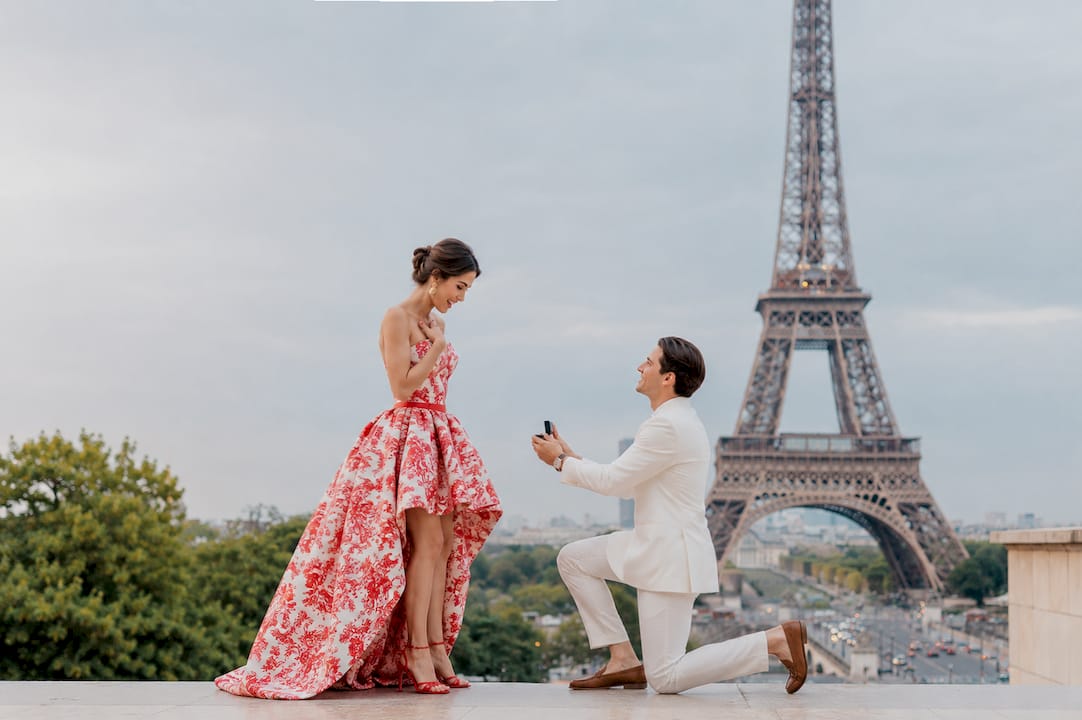
Paris offers extraordinary proposal locations, but each one presents unique photography challenges. The Eiffel Tower at golden hour looks spectacular in photos, but the crowds at the Trocadéro mean your photographer needs extra distance and a longer lens. The Palais Royal gardens are quieter and more intimate, allowing for closer positioning. Choosing the right spot is inseparable from planning your signal strategy.
Scouting locations at the intended proposal time of day is non-negotiable. Light in Paris changes dramatically between 4 PM and 7 PM, and a spot that looks perfect at noon can be backlit and shadowy by evening. Your photographer should visit the location at the same hour you plan to propose, ideally a day or two before.
| Location | Photographer distance | Best lens | Key challenge |
|---|---|---|---|
| Trocadéro (Eiffel Tower view) | 40 to 60 feet | 70 to 200mm | Large crowds blocking line of sight |
| Pont des Arts | 20 to 30 feet | 50 to 85mm | Foot traffic and narrow bridge |
| Palais Royal gardens | 15 to 25 feet | 35 to 85mm | Low light under arcades |
| Seine riverbank | 30 to 50 feet | 70 to 200mm | Boat noise disrupting timing |
| Montmartre steps | 25 to 40 feet | 50 to 100mm | Uneven terrain for positioning |
Pro photographers use long-range lenses placed 20 to 50 feet away to capture the proposal discreetly and clearly. Pre-focusing on the exact spot where you plan to kneel guarantees the critical moment is sharp. You should walk your photographer to that exact spot during your pre-proposal scout, so they can lock focus before the moment arrives.
One detail couples consistently overlook: avoid blocking the photographer’s line of sight when you kneel. If you drop to one knee and your back is to the camera, the most important frame of the sequence is ruined. Face your partner at a slight angle so both faces are visible from the photographer’s position.
Common mistakes to avoid when signaling your photographer
Most failed proposal photo sessions come down to a handful of predictable errors. Knowing them in advance is the difference between a gallery of stunning images and a collection of blurry near-misses.
Signals that are too subtle for the distance. A slight eyebrow raise is invisible at 40 feet. Match signal size to shooting distance every time.
Skipping the backup signal. Paris is unpredictable. A tour group, a passing cyclist, or a sudden rain shower can break the photographer’s line of sight at the critical moment. Always have a plan B.
Rushing because of nerves. Adrenaline makes proposers move faster than they expect, compressing the gap between signal and ring reveal to almost nothing. Give your photographer at least three to five seconds after the signal before you reach for the ring.
Not briefing the photographer on your partner’s likely reaction. If your partner tends to cover their face when surprised, the photographer needs to anticipate that and reposition quickly. Share personality details during your planning call.
Packing up too soon. Photographers advise continuing to shoot for 10 to 20 minutes after the proposal. The immediate aftermath, the tears, the laughter, the first phone calls to family, is often as emotionally powerful as the proposal itself.
“The signal starts the moment, but lingering after the proposal captures the story.” This is the mindset every couple should carry into their proposal day.
How photographers prepare for and respond to a surprise signal
From the photographer’s side, the signal is the end of a long preparation process, not the beginning. Before you give the cue, a skilled proposal photographer has already done significant technical and logistical work to make sure the shot is ready.
Photographers use pre-focus techniques and remote shutter releases to stay ready before the signal arrives. This means the camera is already locked onto the exact spot where you will kneel, exposure is set for the current light, and the photographer is in a stable shooting position. When the signal comes, they are not scrambling. They are already in burst mode.
Professional photographers blend into the environment by posing as tourists or landscape photographers to stay unnoticed. In Paris, this is particularly effective. A person with a camera pointed at the Eiffel Tower draws zero attention. Your partner will not suspect a thing. This stealth approach is what preserves the authentic surprise atmosphere that makes the photos so powerful.
Careful pre-planning includes anticipating environmental factors such as shifting light and unpredictable crowds, requiring flexibility during the shoot. A good photographer has already identified two or three fallback positions before you arrive. If a crowd blocks the primary angle, they move without hesitation. You should discuss these contingency positions during your location scout so nothing catches either of you off guard. For a deeper look at gear and distance recommendations specific to Paris, the Paris proposal photography checklist from Chouettelove covers the technical side in detail.
Key takeaways
A pre-agreed, distance-appropriate signal is the foundation of every successful surprise proposal photo session, and everything else, location, lighting, and timing, builds on top of it.
| Point | Details |
|---|---|
| Signal is non-negotiable | Without a clear cue, photographers guess the moment and risk missing the shot entirely. |
| Match signal to distance | Subtle gestures work at 20 feet; larger, visible actions are needed at 40 to 60 feet. |
| Scout at proposal time | Visit the location at the exact hour you plan to propose to assess light and crowd levels. |
| Linger after the proposal | Shooting for 10 to 20 minutes post-proposal captures the emotional aftermath that tells the full story. |
| Brief your photographer fully | Share your partner’s personality, likely reactions, and any location quirks before the day. |
Why the signal is the detail most couples underestimate
I have photographed proposals at the Trocadéro at sunset, on the Seine at midnight, and in quiet Montmartre courtyards with no one else around. The location changes every time. The signal is always the hinge point. When it works, the whole session flows. When it does not, even the most beautiful Paris backdrop cannot save the photos.
What I have noticed over years of surprise proposal photography is that couples who spend 10 minutes discussing the signal during our planning call get dramatically better results than those who treat it as a minor detail. The signal is not logistics. It is the creative direction of your most important photograph.
The other thing I would push back on is the idea that a more complex signal is a better signal. I have seen elaborate plans involving multiple gestures, specific phrases, and timed countdowns fall apart completely under the pressure of the moment. The simplest signal you can both remember under adrenaline is always the right one. One gesture. One clear moment. That is all it takes.
Trust your photographer to handle everything else. Their job is to be invisible until the signal, and then to be everywhere at once. Your only job is to give that one clear cue and then be completely present with your partner.
Plan your Paris proposal with Chouettelove
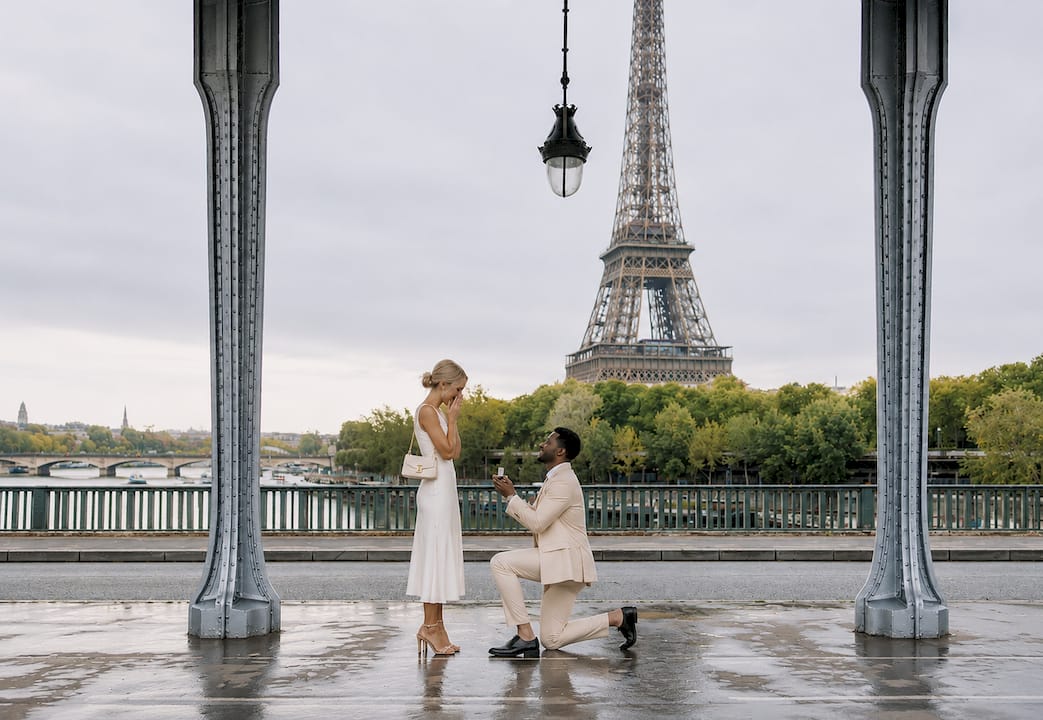
Chouettelove specializes in surprise proposal photography across Paris, from the Eiffel Tower to hidden garden courtyards along the Seine. Every session includes a full planning consultation where signal strategy, location scouting, and timing are worked out in detail before the day. You will never be left guessing. Browse the Paris proposal photo gallery to see how discreet coordination translates into stunning, emotional images. For couples who want a short, focused session, the quick Eiffel Tower proposal shoot is a popular option that covers the signal briefing, positioning, and 30 minutes of coverage at one of Paris’s most iconic spots.
FAQ
What is a signal in surprise proposal photography?
A signal is a pre-agreed physical gesture between the proposer and photographer that cues the photographer to begin shooting at the exact moment of the proposal. Common examples include adjusting a watch, removing sunglasses, or touching the back of the neck.
How far away should a proposal photographer stand?
Pro photographers position themselves 20 to 50 feet away using a 70 to 200mm lens to capture the moment discreetly without being noticed by the partner being proposed to.
How long should a photographer keep shooting after the proposal?
Photographers recommend continuing to shoot for 10 to 20 minutes after the proposal to capture the emotional reactions, embraces, and candid moments that follow the initial question.
What are the best Paris locations for a surprise proposal?
The Trocadéro, Pont des Arts, Palais Royal gardens, and the Seine riverbank are all strong options. Each location requires different photographer positioning and signal visibility, so scouting at the planned proposal time is critical.
Do I need a cover story for my proposal photographer?
A cover story, such as a casual couple photoshoot, helps your partner feel relaxed and dressed for photos without suspecting the proposal. It also gives the photographer a natural reason to be present and already shooting before the signal is given.
Recommended